

Population-Based Algorithms
Population-based algorithms maintain a collection of candidate solutions (individuals) that evolve together. They share information about promising regions and provide natural parallelism for multi-core systems.
Overview
Algorithm |
Description |
|---|---|
Particles move toward best positions with velocity dynamics. |
|
Particles spiral inward toward the global best. |
|
Multiple simulated annealers at different temperatures. |
|
Selection, crossover, and mutation inspired by evolution. |
|
Population of hill climbers with occasional mixing. |
|
Creates new solutions from weighted differences. |
|
Adapts a full covariance matrix to learn landscape structure. |
When to Use Population-Based
Good for:
Multi-modal landscapes with distinct basins
Problems that benefit from parallelization
Discrete and combinatorial optimization (GA, DE)
Robust optimization in noisy environments
Not ideal for:
Very expensive objective functions (each iteration evaluates N individuals)
Simple unimodal functions (overkill)
Very tight computational budgets
Common Parameters
All population-based algorithms share:
Parameter |
Default |
Description |
|---|---|---|
|
10 |
Number of individuals in the population |
Population Size
Larger populations provide better coverage but require more evaluations per iteration:
from gradient_free_optimizers import ParticleSwarmOptimizer

# Small population - faster iterations, may miss optima
opt = ParticleSwarmOptimizer(search_space, population=5)

# Large population - thorough coverage, slower iterations
opt = ParticleSwarmOptimizer(search_space, population=50)
Tip
Rule of thumb: Use population = 10 * n_dimensions as a starting point,
then adjust based on convergence behavior.
Algorithm Comparison
Algorithm |
Information Sharing |
Best For |
Key Feature |
|---|---|---|---|
Particle Swarm |
Global + Personal best |
Continuous optimization |
Velocity-based movement |
Spiral |
Global best |
Balanced exploration |
Spiral trajectories |
Parallel Tempering |
Temperature swaps |
Multi-modal |
Temperature diversity |
Genetic Algorithm |
Crossover |
Discrete/combinatorial |
Evolutionary operators |
Evolution Strategy |
Selection |
Noisy optimization |
Robust selection |
Differential Evolution |
Difference vectors |
Non-linear continuous |
Self-adaptive steps |
CMA-ES |
Covariance matrix |
Correlated continuous |
Full covariance adaptation |
Conceptual Comparison
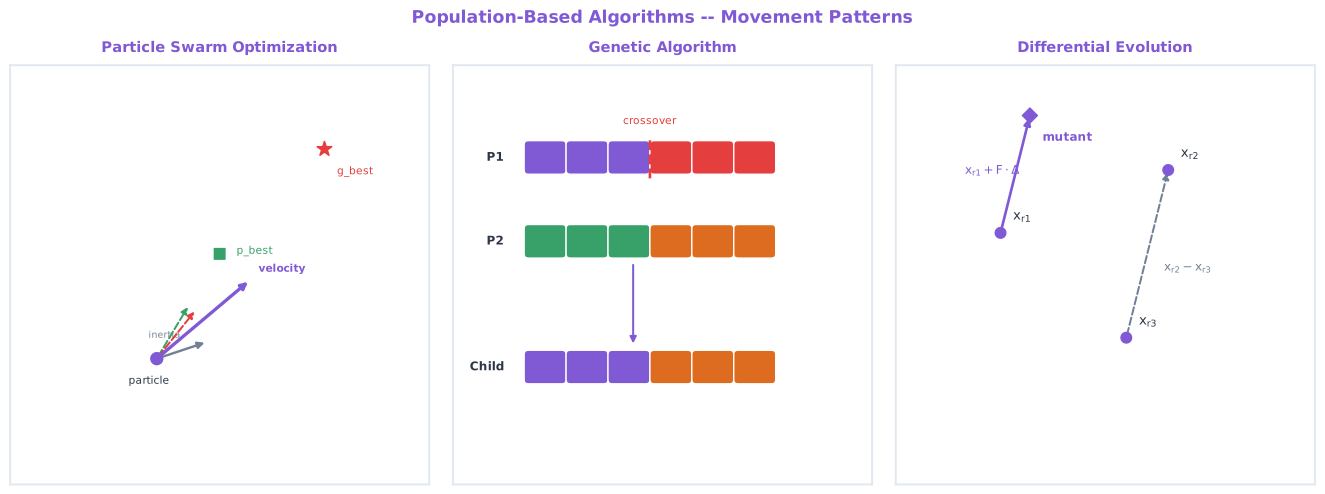
How different population-based algorithms move their individuals. PSO uses velocity vectors, GA recombines parent genes, and DE creates new candidates from weighted differences.
Visualization
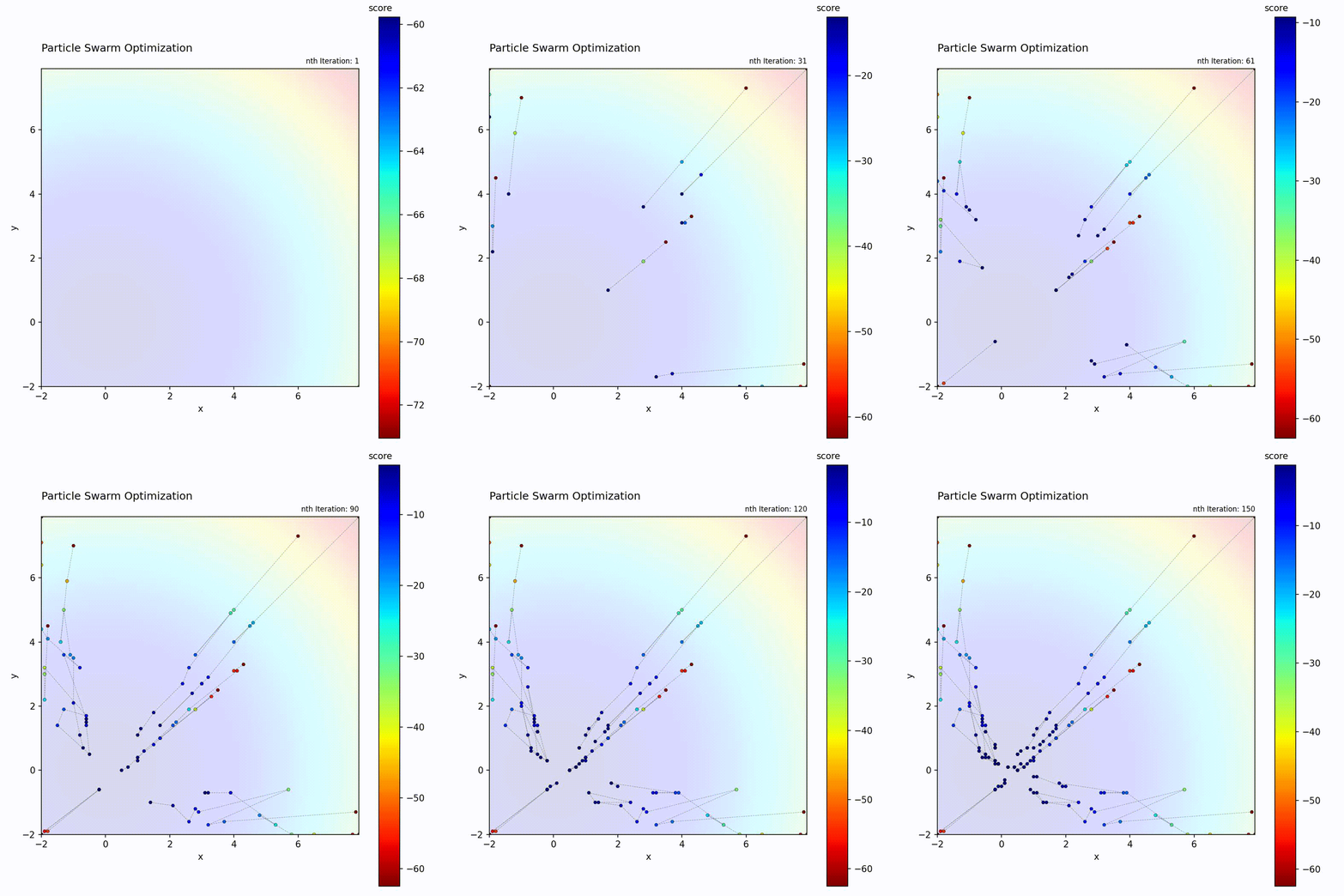
Particle Swarm: particles converge toward the best known position.
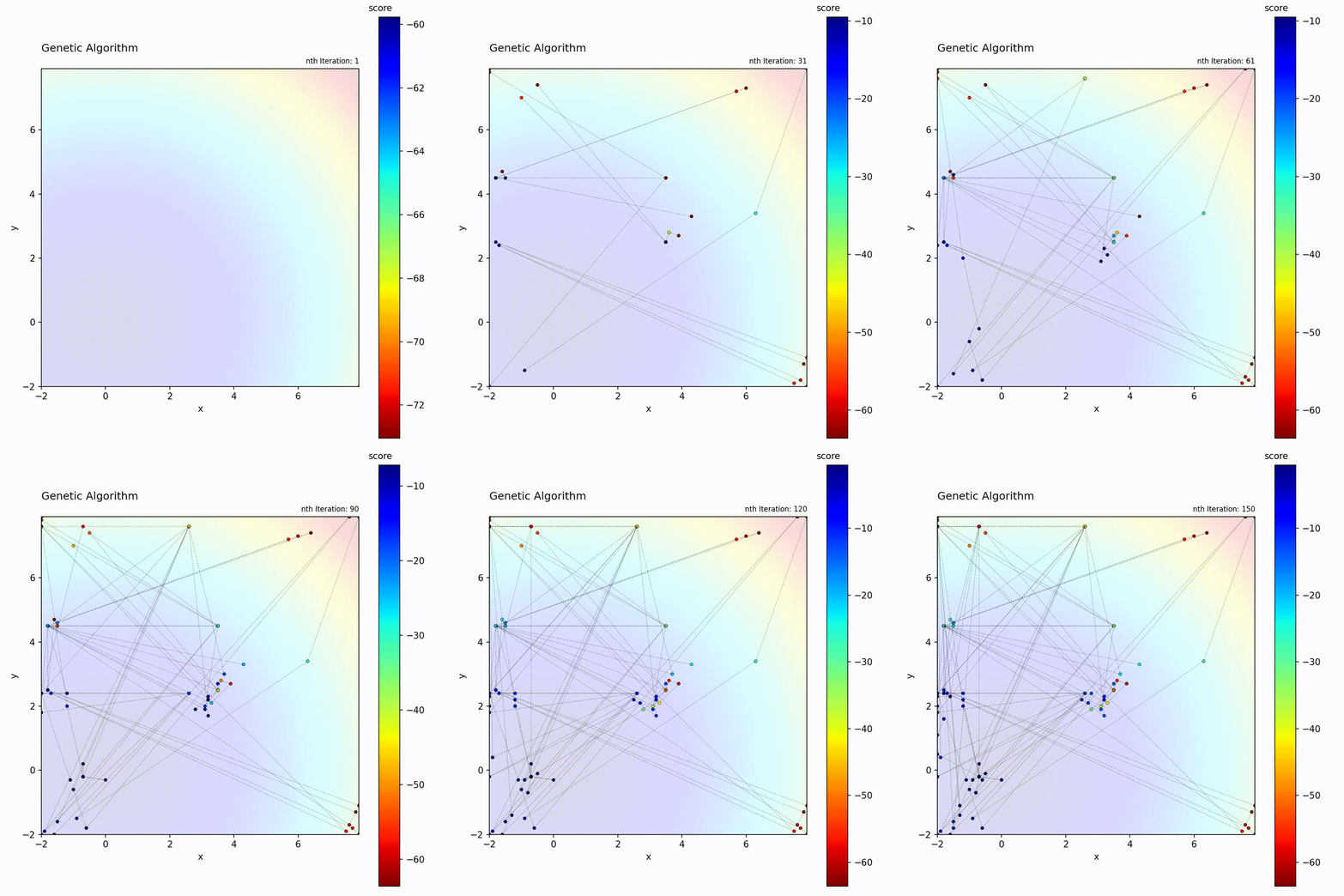
Genetic Algorithm: population evolves through selection and crossover.
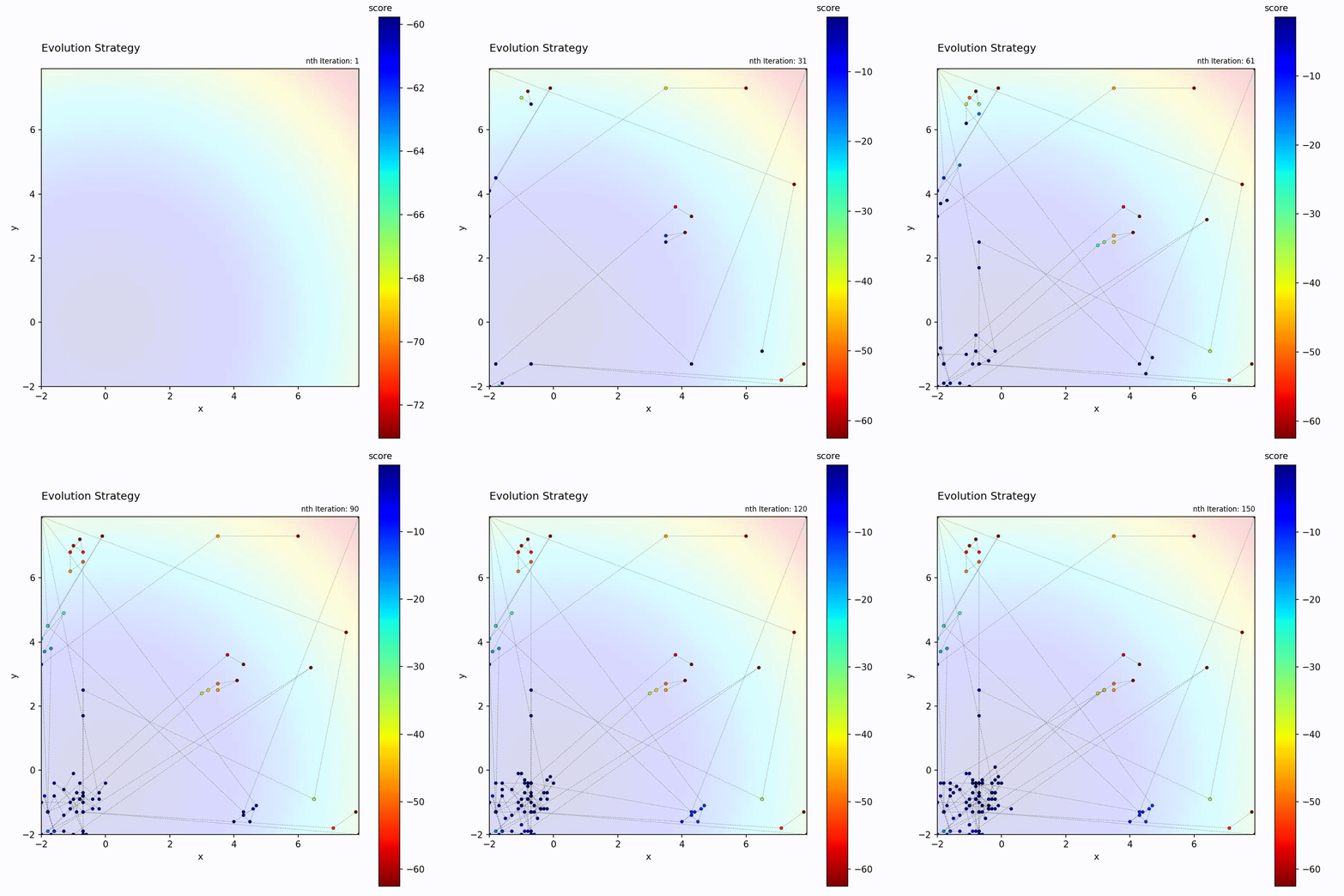
Evolution Strategy: population of hill climbers with selection.
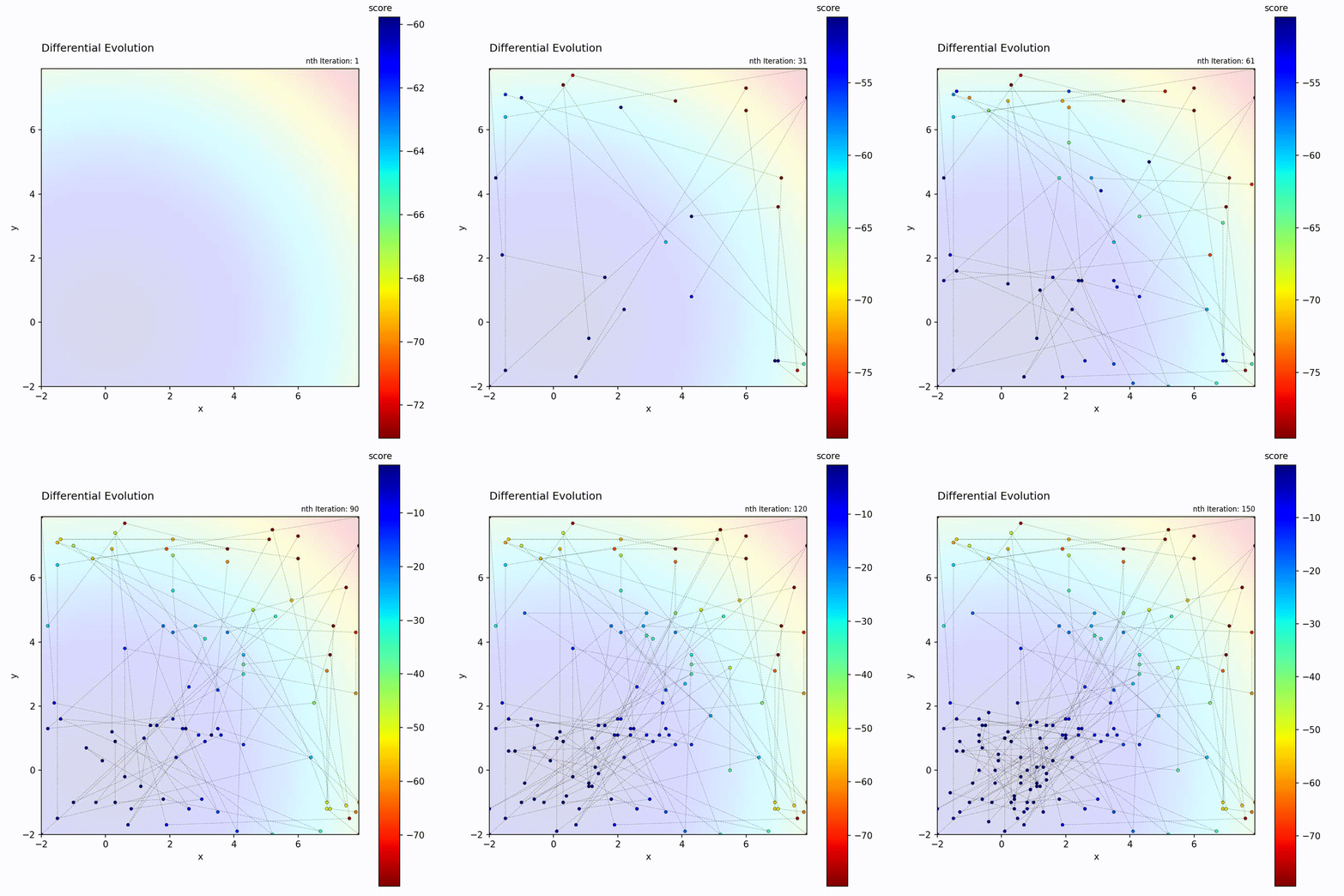
Differential Evolution: creates trials from weighted differences.
Example: Particle Swarm Optimization
import numpy as np
from gradient_free_optimizers import ParticleSwarmOptimizer

def rastrigin(para):
    x = para["x"]
    y = para["y"]
    A = 10
    return -(A * 2 + (x**2 - A * np.cos(2 * np.pi * x))
                  + (y**2 - A * np.cos(2 * np.pi * y)))

search_space = {
    "x": np.linspace(-5.12, 5.12, 100),
    "y": np.linspace(-5.12, 5.12, 100),
}

opt = ParticleSwarmOptimizer(
    search_space,
    population=20,
    inertia=0.5,
    cognitive_weight=0.5,
    social_weight=0.5,
)

opt.search(rastrigin, n_iter=200)
print(f"Best: {opt.best_para}, Score: {opt.best_score}")