

Global Search Algorithms
Global search algorithms are designed to explore the entire search space rather than focusing on a single neighborhood. They are better at avoiding local optima but may be slower to converge to the exact optimum.
Overview
Algorithm |
Description |
|---|---|
Pure random sampling. Simple but effective baseline. |
|
Systematic traversal of the search space. |
|
Hill climbing with periodic random restarts. |
|
Large initial steps that gradually decrease. |
|
Structured exploration using geometric patterns. |
|
Sequential optimization along each dimension. |
|
Uses Lipschitz continuity bounds to prune search. |
|
Divides space into regions, exploring the most promising. |
When to Use Global Search
Good for:
Unknown landscapes without prior information
Problems with many local optima
Establishing a baseline for comparison
Cases where you need guaranteed coverage
Not ideal for:
Very expensive objective functions (use SMBO instead)
Fine-tuning when you have a good starting point
Very high-dimensional spaces
Algorithm Comparison
Algorithm |
Deterministic? |
Coverage |
Best Use Case |
|---|---|---|---|
Random Search |
No |
Probabilistic |
Baseline, high dimensions |
Grid Search |
Yes |
Complete |
Small, discrete spaces |
Random Restart |
No |
Hybrid |
Multi-modal with local structure |
Random Annealing |
No |
Adaptive |
Broad to focused search |
Pattern Search |
Yes |
Structured |
Derivative-free optimization |
Powell’s Method |
Yes |
Dimensional |
Separable functions |
Lipschitz |
Yes |
Bounded |
Functions with known smoothness |
DIRECT |
Yes |
Hierarchical |
Guaranteed convergence |
Conceptual Comparison
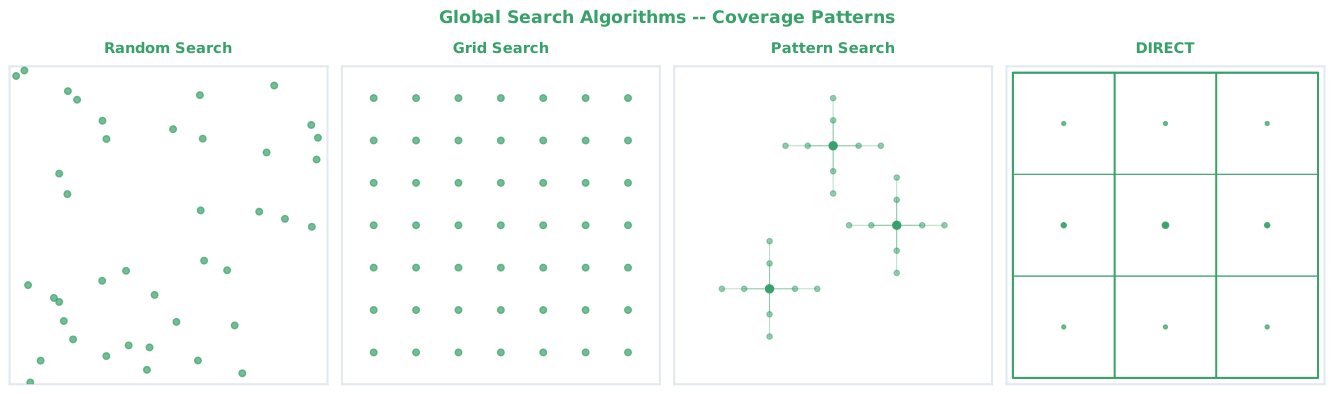
How each global search algorithm covers a 2D search space. Random Search samples uniformly, Grid Search covers systematically, Pattern Search uses geometric patterns, and DIRECT divides hierarchically.
Visualization
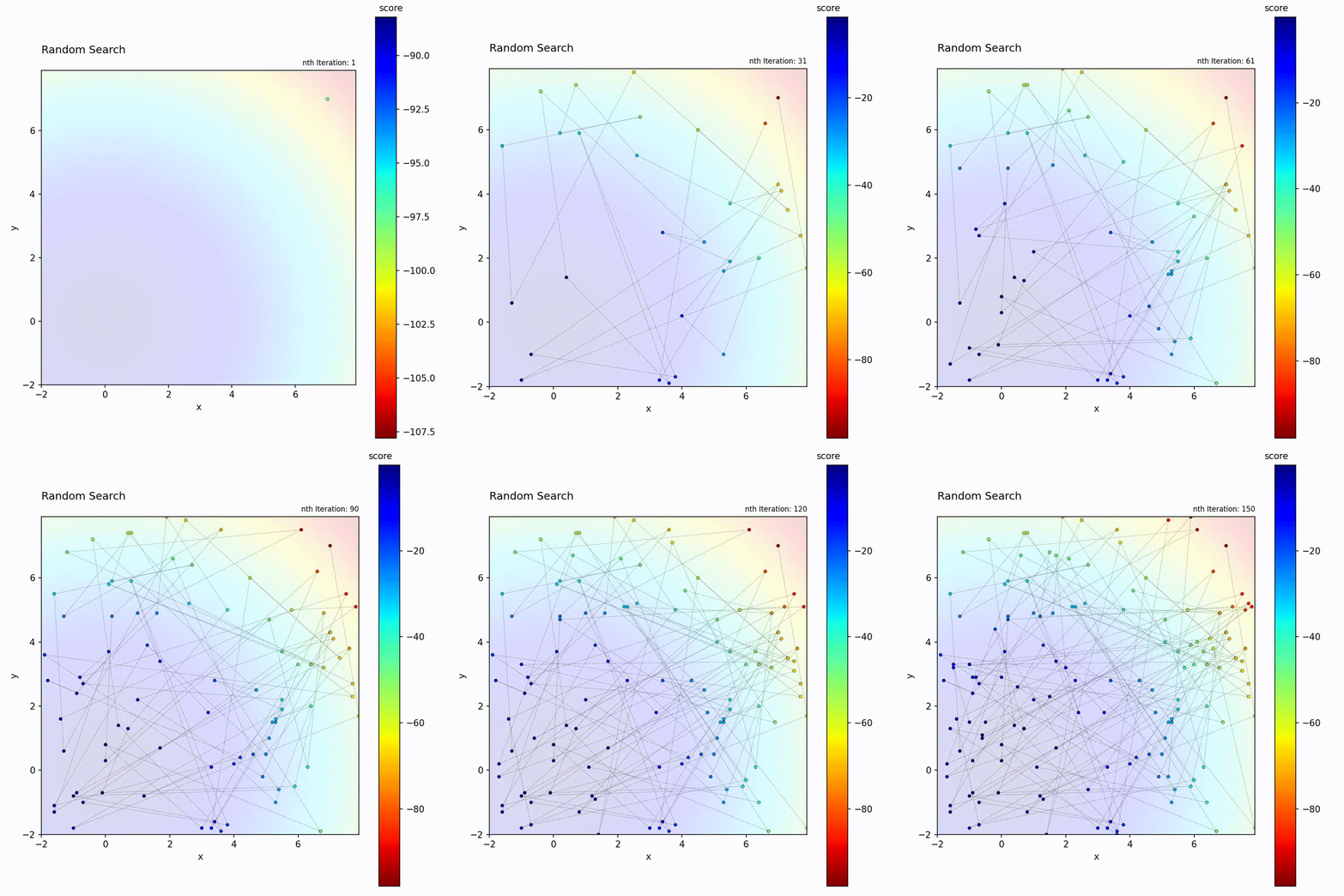
Random Search explores the space uniformly without bias.
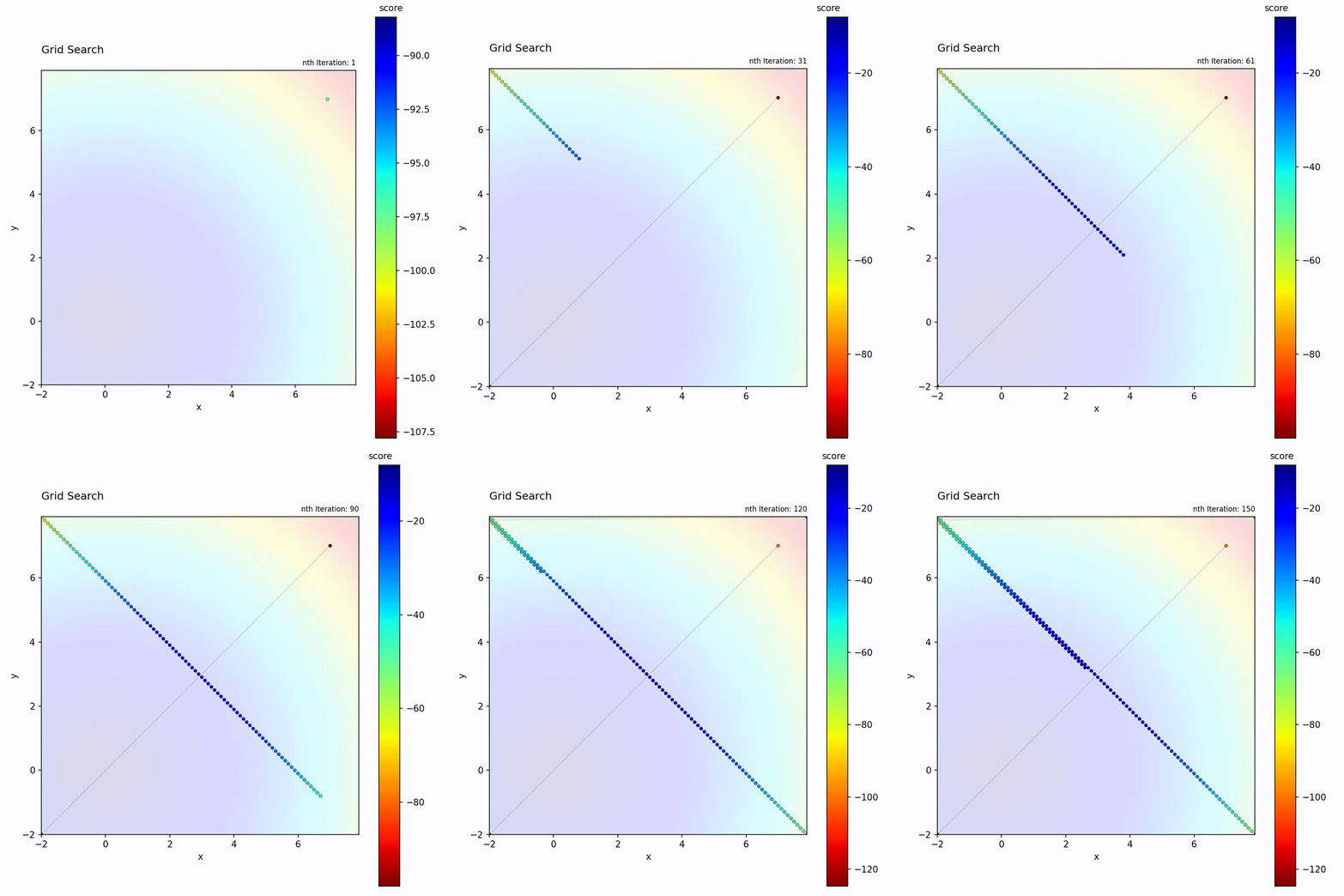
Grid Search systematically covers the space.
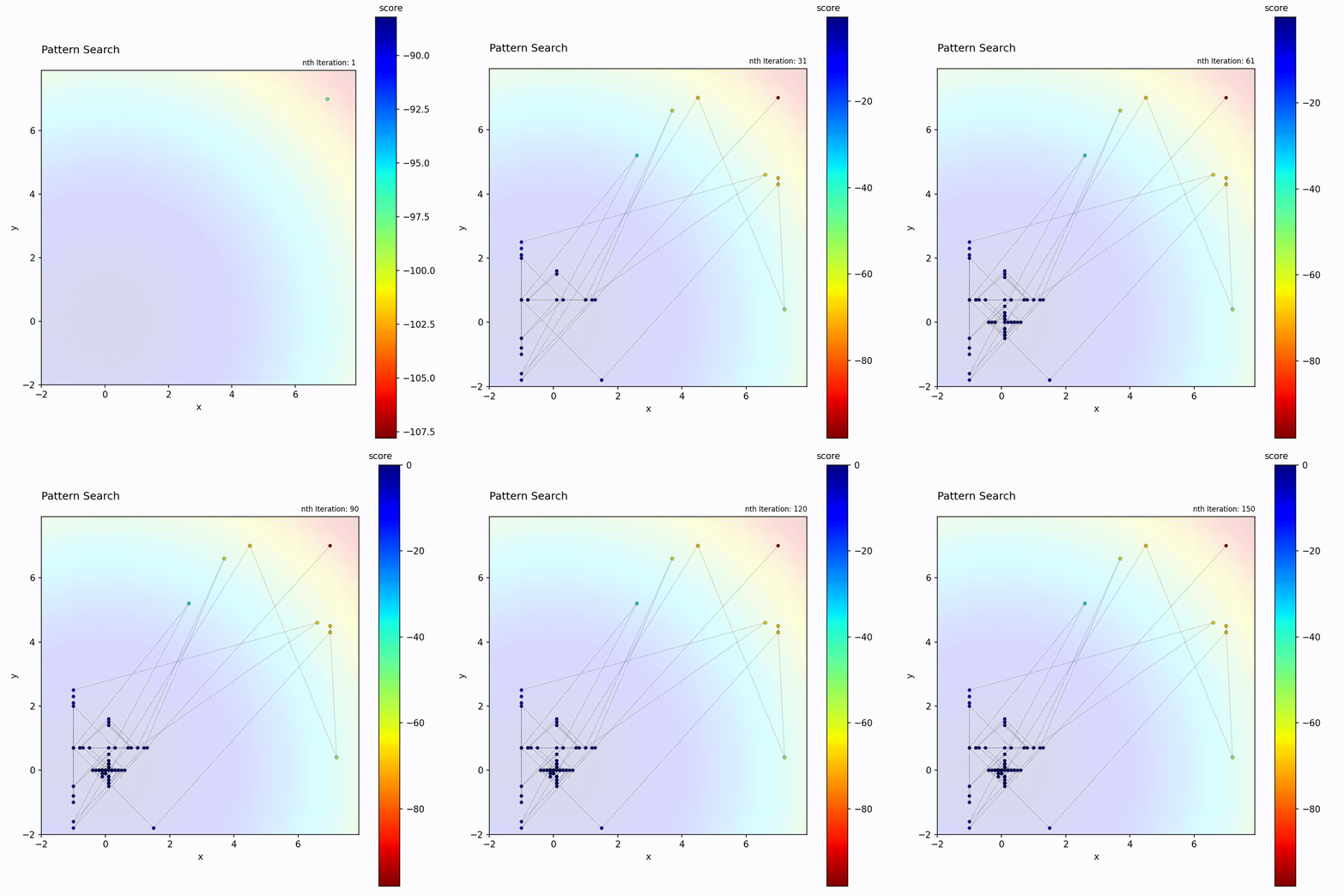
Pattern Search uses structured geometric patterns.
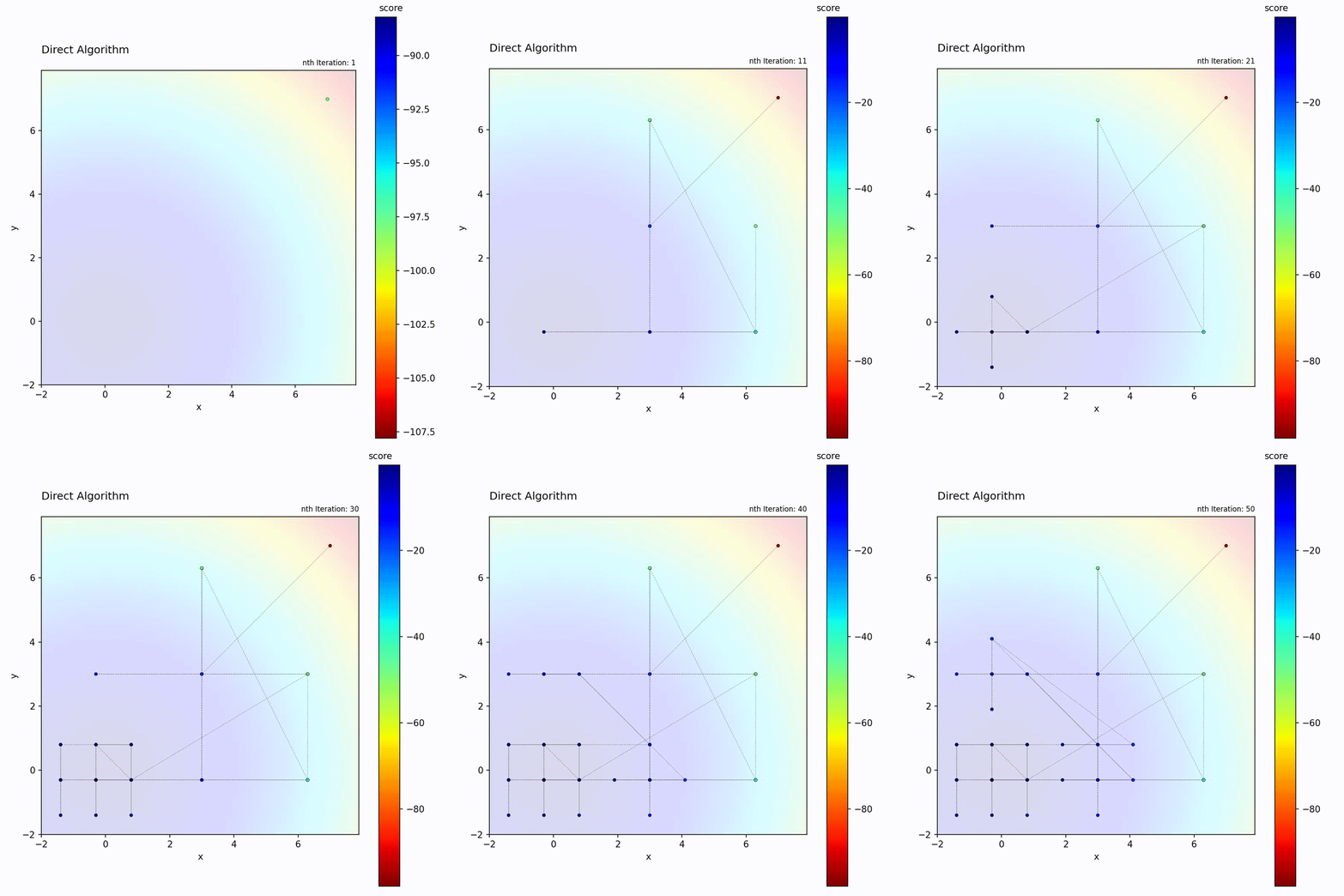
DIRECT divides space hierarchically, focusing on promising regions.